“I don’t wanna go to school!”
All of a sudden, the COVID-19 pandemic has brought school into millions of homes around the world. A familiar morning complaint like the above does not always happen anymore. The Western notion that formal education primarily occurs inside a specifically designated school building is suddenly being rethought. Is it still schooling if it happens somewhere else?
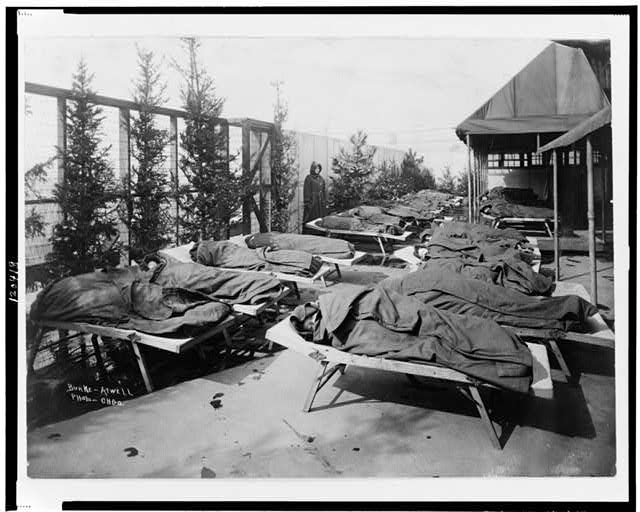
Of course, educators have been asking incisive questions about where teaching and learning happen for as long as there have been schools. Innovations like open-air schools, field trips, and “schools without walls” were 20th Century precursors to the growth of online education, which almost overnight has become the mode of schooling for untold numbers of children worldwide.
Back in January when we published The Curriculum Foundations Reader (Palgrave), we included a chapter chronicling this history in American education, not because we saw the pandemic coming, but because the very basic question about where schooling takes place was an intriguing entry point into curriculum history. It moved us away from major writers and key events and towards teachers, students, and community members, whose on-the-ground theorizing and experimentation provide new insights into the history of education. And it gives us new, unexpected connections between past, present, and as we argue, the future.
The Curriculum Foundations Reader (CFR) was born out of our hope to create an alternative curriculum history survey text. We wanted a volume that hewed close to classrooms and the work of educators in order to explore how teaching and learning took place in its varied historical contexts. CFR brings readers into classrooms and communities to explore critical curriculum issues in the United States throughout the twentieth century by focusing on the voices of teachers, administrators, students, families, and communities. Framed by an enduring question about curriculum, each chapter begins with a historical overview essay of a key topic of the 20th century. The essay is followed by multiple archival sources, which allow readers to directly engage with educators and others in the past. This promotes in-depth historical analysis of contemporary issues on teaching for social justice in the fields of curriculum studies and curriculum history.
The book chapters address the following questions:

- Where Do Teaching and Learning Happen?
- Who Is Excluded? Who Is Empowered? Marginalization and Resistance in the Curriculum
- What Is at the Center of the Curriculum?
- Who Chooses What Is Taught?
- Which Language(s)?
- How Do We Know What Students Have Learned?
We see these questions, rooted in American educational history, as part of a worldwide, transnational curriculum history. Within the CFR’s chapters, we find the traces of European pedagogical practices and their influences on American schooling. We also see ways that immigrant, migrant, enslaved, and indigenous groups continually reshape schools and communities, bringing cultural assets and new perspectives into schooling.
In this present moment where so much about our education systems has been upended, we call for a broader international conversation centered on ground-level curriculum history. This likely means venturing into new spaces and different kinds of sources to conduct research on topics that are often left unarchived. But we have tremendous amounts to learn about the prolific ways educators and communities have reformed and adapted schooling around the world. This version of educational history bears directly on so many of us today who are trying to recreate some version of school in our homes. It is a new chapter in the practical history of curriculum.
Ann Marie Ryan is professor at the University of Texas at San Antonio. Her research concentrates on the history of Catholic and public education in the United States from the early to mid-20th century.
Charlie Tocci is assistant professor at Loyola University Chicago. He explores connections between American education and democracy in the past and present. In collaboration with a team of education historians and archivists, he develops interdisciplinary knowledge and networks to preserve urban public education’s history.
Seungho Moon is associate professor at Loyola University Chicago. His research centers on promoting equity in education by interrogating interdisciplinary knowledge in curriculum studies and university-community-school partnerships.
Michael Hines is assistant professor at Stanford University. His research interests include the history of education in the United States. Currently, his research focuses on how African Americans in the early twentieth created new curricular discourses around race and historical representation.